December 2025 Academic Seminar: “Climate Reporting and Regulations”




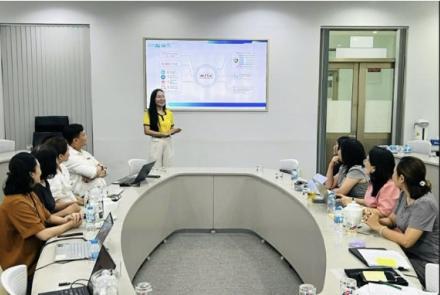
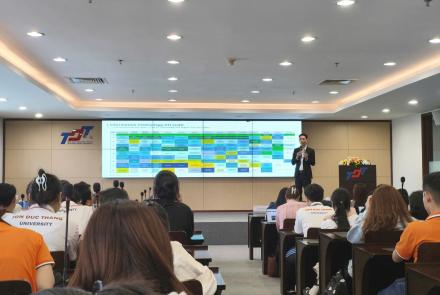
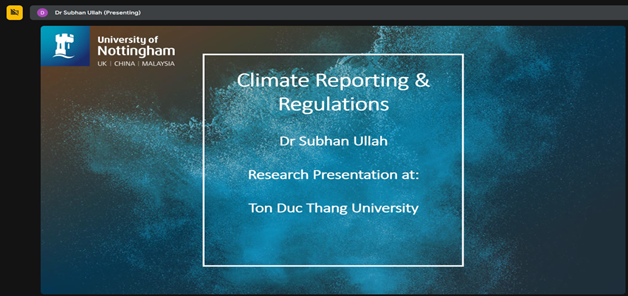
As part of the Faculty’s regular research exchange activities aimed at fostering an academic environment and promoting a research culture, on December 5, 2025, the Faculty of Accounting proudly organized a professional seminar featuring a presentation by Assoc. Prof. Dr. Subhan from the University of Nottingham, UK. He is a distinguished scholar with numerous reputable publications in accounting, corporate reporting, and sustainability governance.
The seminar attracted a large number of lecturers from the Faculty, demonstrating strong interest in current research related to climate change, sustainability, and the increasing demand for transparency in today’s global economic context.
Assoc. Prof. Dr. Subhan introduced research topics centered on Climate Reporting and Regulations, aiming to help lecturers gain a deeper understanding of the relationship between accounting, the environment, and corporate responsibility. The main content included:
1. The necessity and benefits of governance reporting related to environmental issues
2. The shift in corporate reporting in the new context: from traditional financial statements to non-financial reporting, ESG reporting, and sustainability reporting. The speaker analyzed specific benefits for businesses and investors when environmental risks are disclosed more transparently.
3. Costs associated with climate change risks:
Highlighting the economic impacts of climate change on businesses, including compliance costs, supply chain disruptions, long-term financial risks, and pressures from international standards.
4. Disclosure requirements from professional organizations:
Introducing reporting frameworks such as IFRS, TCFD, and the EU CSRD, along with discussions on the readiness of businesses in emerging economies.
5. Risks related to increased plastic usage:
Analyzing the global plastic crisis and related reporting obligations, while emphasizing the role of accounting in measuring, classifying, and tracking environmental costs.
6. Governance solutions to address environmental risks:
Proposing solutions from the perspectives of corporate governance, public policy, accounting standards, and community action.
In addition, the speaker shared various climate change–related studies published in international journals, making the session more engaging and accessible. Following the presentation, lecturers participated in an active and lively discussion.
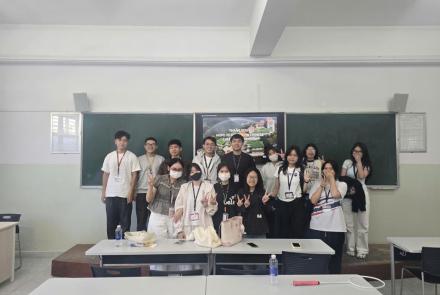
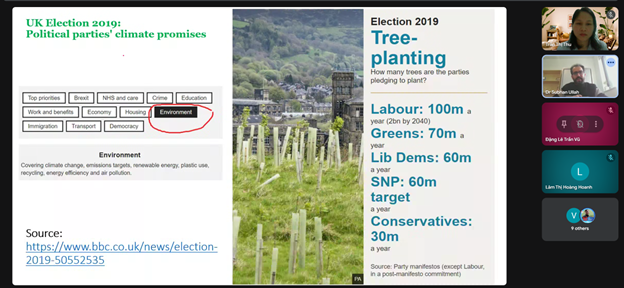
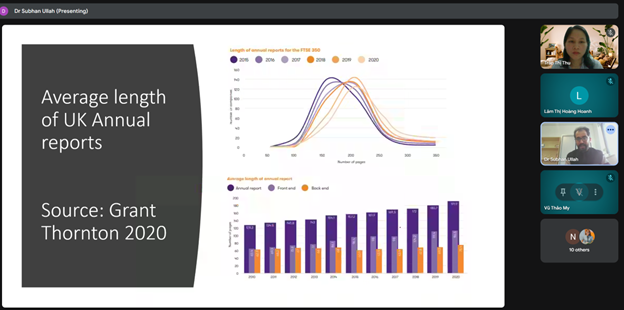
Some photos from the seminar:
- Log in to post comments