Faculty of Accounting – Industry Exposure: The First Experiential Learning Module of the 2026–2027 Academic Year


More than 200 first-year Accounting students stepped beyond the classroom to explore the business environment, meet industry experts, discover manufacturing operations, and develop their first entrepreneurial ideas. More than an experiential learning module, Module 1 – Industry Exposure, organized by the Faculty of Accounting, Ton Duc Thang University (TDTU), during the first semester of the 2026–2027 academic year, offered students a dynamic introduction to their future profession. It helped them gradually recognize the role of accounting in everyday life and business operations from the very beginning of their university journey.
Learning from Experts – Understanding Corporate Culture and Professional Conduct
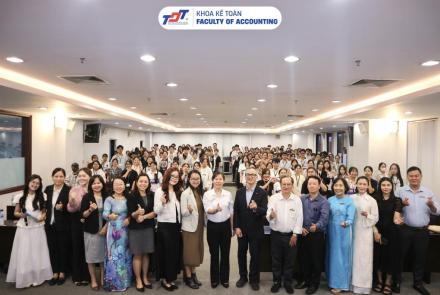
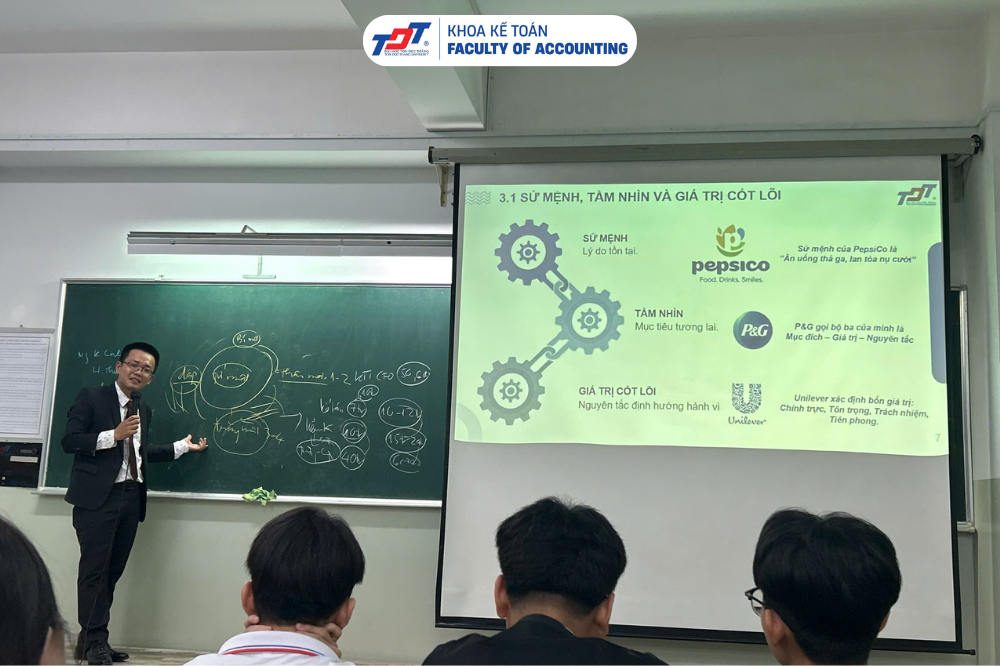
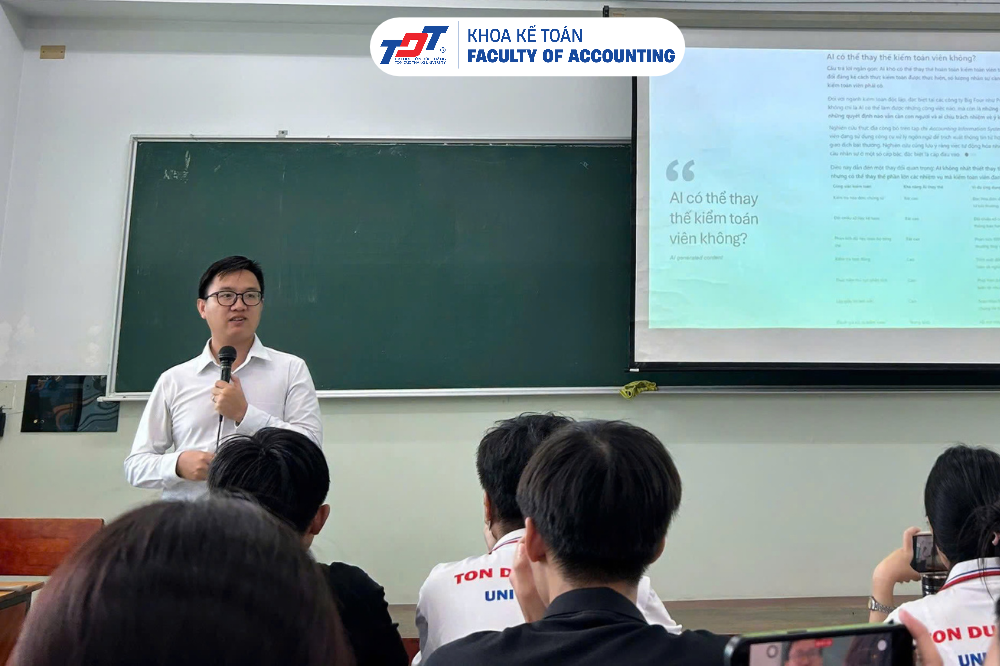
The students’ industry exposure journey began with sessions led by experienced experts, business leaders, and entrepreneurs who shared insights drawn from their professional experience.
The module featured speakers from reputable organizations and businesses:
-
Dr. Doan Thi Thu Thuy – Founder and CEO of Yen Khoa One Member Company Limited; Principal of Khoa Tri Foreign Language Center and Smart Learn.
-
M.A. Lo Trung Chinh – Senior Audit Manager, Assurance Department, PwC Vietnam.
-
Mr. Chau Thanh Tai – Founder and CEO of Recs Vietnam Company Limited; concurrently Deputy General Director in charge of Technology Consulting and Audit at Vietvalues.
Through practical insights into business management and operations, students learned about organizational culture, professional working practices, compliance, discipline, and the ability to adapt to the workplace.
One important lesson emphasized throughout the sessions was that while every organization may have its own distinct culture, diligence, punctuality, a serious attitude, accountability, and compliance are essential foundations of professional conduct.
The speakers also connected these workplace lessons with TDTU’s core cultural values, particularly its three principles of moral education:
-
Achieving good academic results as a way of showing gratitude to one's parents.
-
Respecting the law and the University's regulations.
-
Avoiding selfishness and showing consideration for the community.
Through these discussions, students came to understand that professionalism does not begin only when they enter the workforce. It is built through everyday actions on campus: attending classes on time, following university regulations, showing respect to lecturers, treating fellow students with consideration, and taking responsibility for the community.
Firsthand Visits to Businesses – Experiencing Real-World Operations
While the experts’ insights helped students visualize the workplace, company visits gave them the opportunity to observe and experience business operations firsthand.
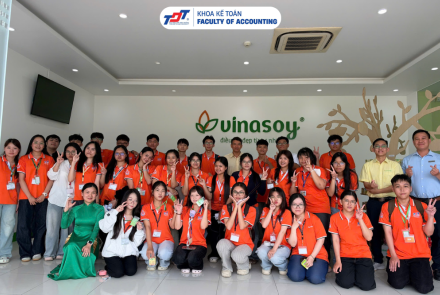
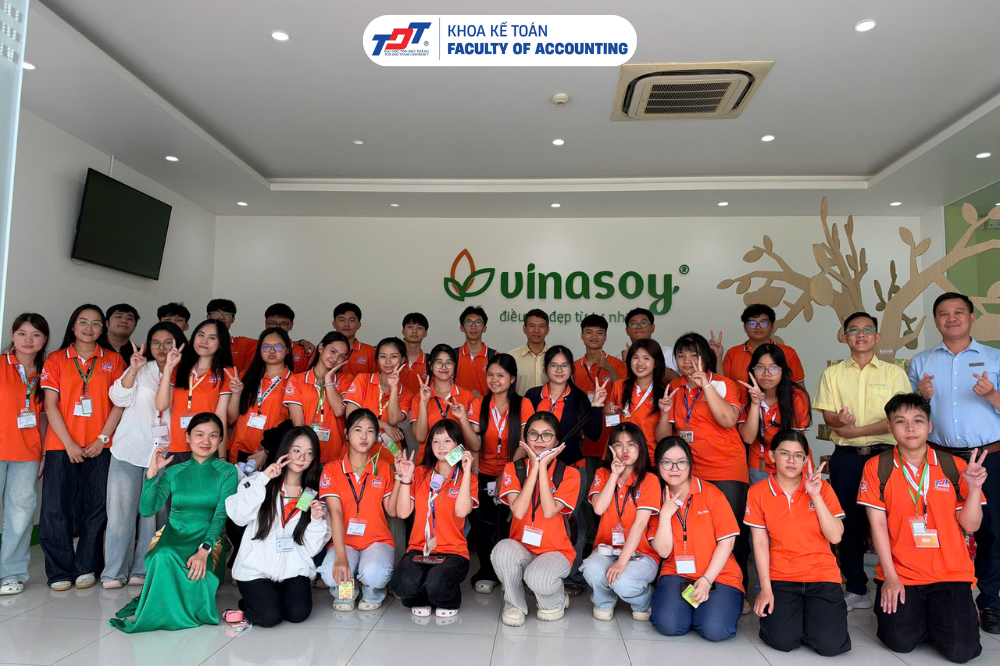
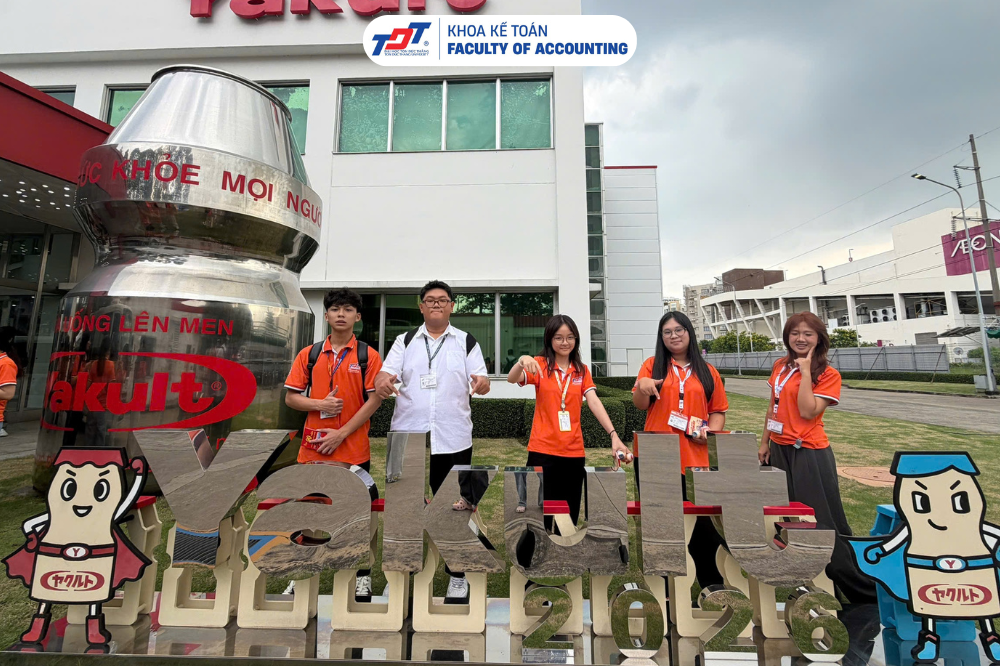
During the semester, students visited three manufacturing facilities: Vinasoy Factory, Ajinomoto Factory, and Yakult Factory. These companies have well-established brands familiar to consumers, along with extensive histories and experience in manufacturing operations. At each destination, students were introduced to the company's history, corporate culture, and organizational structure. They also toured production processes and learned how businesses organize and manage their operations.
Starting with familiar everyday products, students gained a broader perspective on the systems behind them, from human resource organization and materials management to production-line operations and product distribution.
These visits also helped students recognize that every product reaching consumers is the result of coordination among multiple departments, resources, and management activities. Within this system, accounting information plays an important role in monitoring and managing resources and supporting business decision-making.
From Reading to Entrepreneurship – Discovering How Accounting Shapes Everyday Life
What made Module 1 particularly distinctive was not only its connection with businesses, but also the way the Faculty of Accounting integrated real-world experiences with reading activities and the practical application of knowledge.
Accompanying students throughout this journey was the illustrated book “The Accounting Squad – A Journey to Decode the Numbers”, co-edited by Assoc. Prof. Dr. Le Thi My Hanh, Dean of the Faculty of Accounting at TDTU, and Dr. Tran Khanh Lam, Vice Chairman and Secretary General of the Vietnam Association of Certified Public Accountants (VACPA).
Through the entrepreneurial journey of the character Doanh Doanh, the book offers an accessible and engaging perspective on the role of accounting in socioeconomic life. Accounting is not limited to large corporations or financial statements; it is also present in familiar everyday activities such as managing personal expenses, balancing household income and expenditure, monitoring cash flows, and using resources efficiently in business operations.
Inspired by the stories in the book, students were presented with an engaging challenge: If you were starting your own business, where would you begin, and how would you apply accounting knowledge to manage its operations?
Although they had not yet studied specialized accounting subjects, student groups took on the challenge of developing their own business ideas. These ranged from coffee shops, milk tea stores, bakeries, and flower shops to book rental services.
Some projects featured relatable names such as Mint Coffee and Tea, Nắng, Yohome, Oldbook, Tiệm bánh mì Teen, Trà sữa “Hẻm nhỏ”, Bếp Nhà Kế, Nâu Coffee, and Mộc Miên, among others.
Many of these ideas focused on familiar products and services that meet everyday needs, with fellow university students as their primary target customers – people of the same age group and learning environment who understand one another's needs.
Beyond the business concepts themselves, what stood out was how students began considering the fundamental questions involved in launching a business:
-
What resources are needed to start a business?
-
Where will the initial investment capital come from?
-
What assets and equipment need to be acquired?
-
How should projected revenue and expenses be determined?
-
How can a business assess whether it is generating a profit?
-
Who are the target customers, and how can the business reach them?
Starting from an entrepreneurial story in a book, students took their first steps in connecting theory with practice and understanding the relationships among assets, capital, revenue, expenses, and business performance. Concepts that might otherwise seem unfamiliar to first-year students became more accessible when applied to business ideas they had developed themselves.
From Experience to Growth – The First Lessons on a Professional Journey
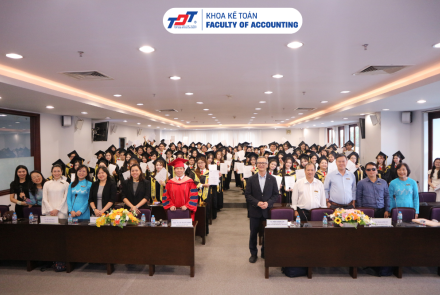
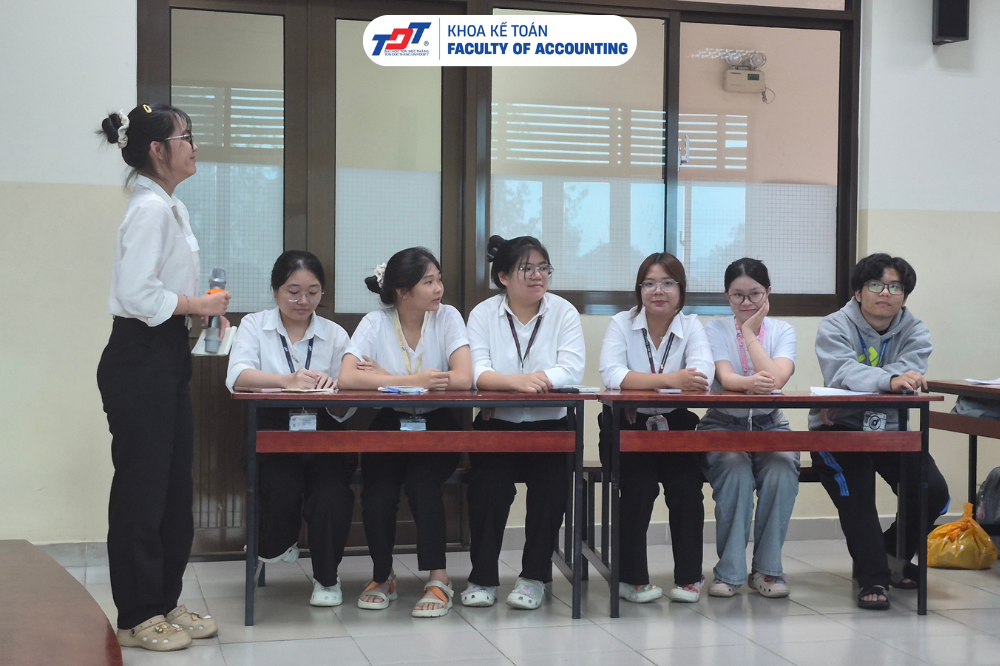
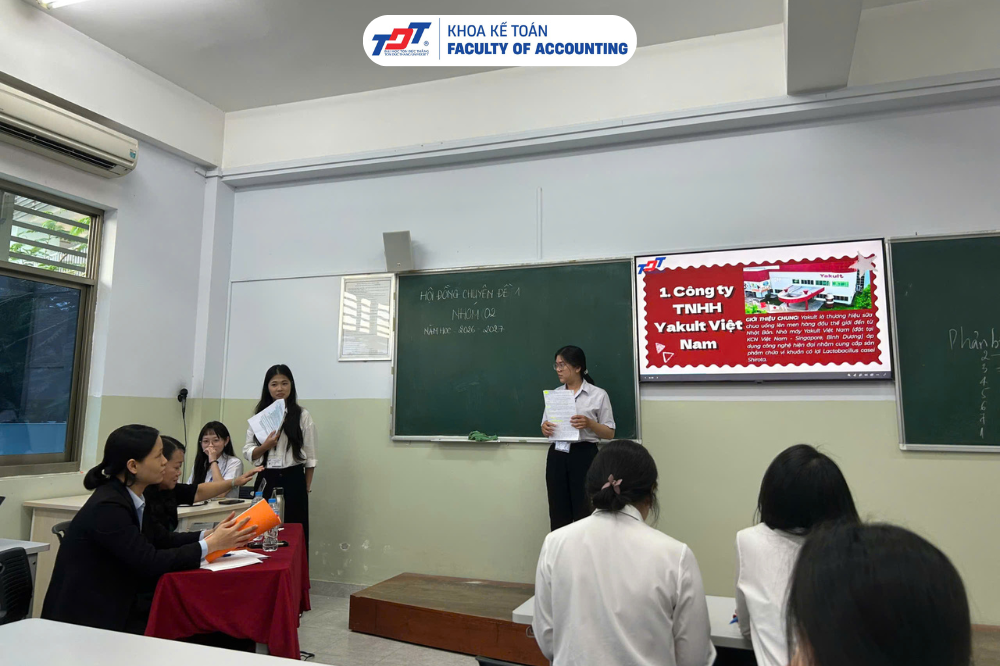
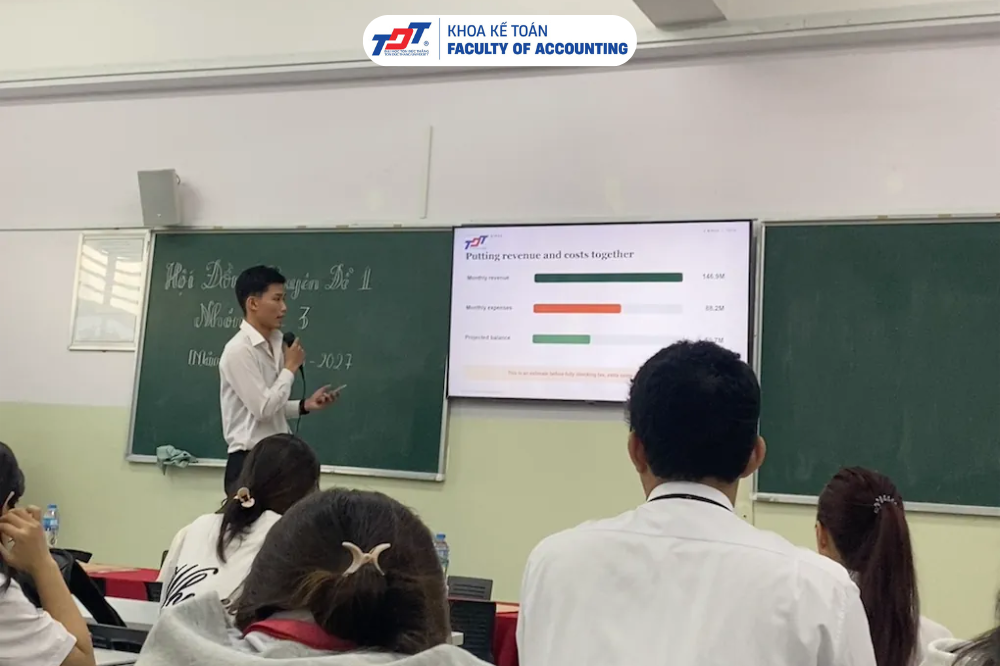
The module concluded with group presentations and discussions, during which students reviewed their learning journey, shared observations from company visits, recounted memorable experiences at the businesses, and presented their self-developed entrepreneurial projects.
Although the ideas were still at an early stage rather than fully developed business models, each project demonstrated students’ efforts to apply knowledge gained from different sources: the practical insights shared by guest speakers, firsthand observations at businesses, and lessons inspired by The Accounting Squad – A Journey to Decode the Numbers.
Through presenting and discussing their projects, students had the opportunity not only to demonstrate their observation, critical thinking, and knowledge application skills, but also to develop teamwork, communication, presentation, and idea-defending skills.
More importantly, these activities helped students recognize that accounting is not simply about dry figures or technical procedures found only within businesses. It is closely connected to every decision involving resource allocation, every income and expenditure transaction, and every process through which economic value is created.
Every session with an expert broadens a perspective. Every business visit offers a deeper understanding of reality. Every page of a book reveals something new. And every entrepreneurial project is an opportunity to apply what students have learned to real life.
Through an integrated approach that connects knowledge, experience, and practice, the Faculty of Accounting aims to help students not only gain a better understanding of their chosen field but also develop professional awareness, a proactive learning mindset, and the ability to adapt to the business environment from an early stage.
After all, the journey toward becoming a professional in accounting and auditing does not have to wait until students complete their specialized courses. It can begin in the very first year of university, through their earliest experiences and the way they observe, think, learn, and grow every day.
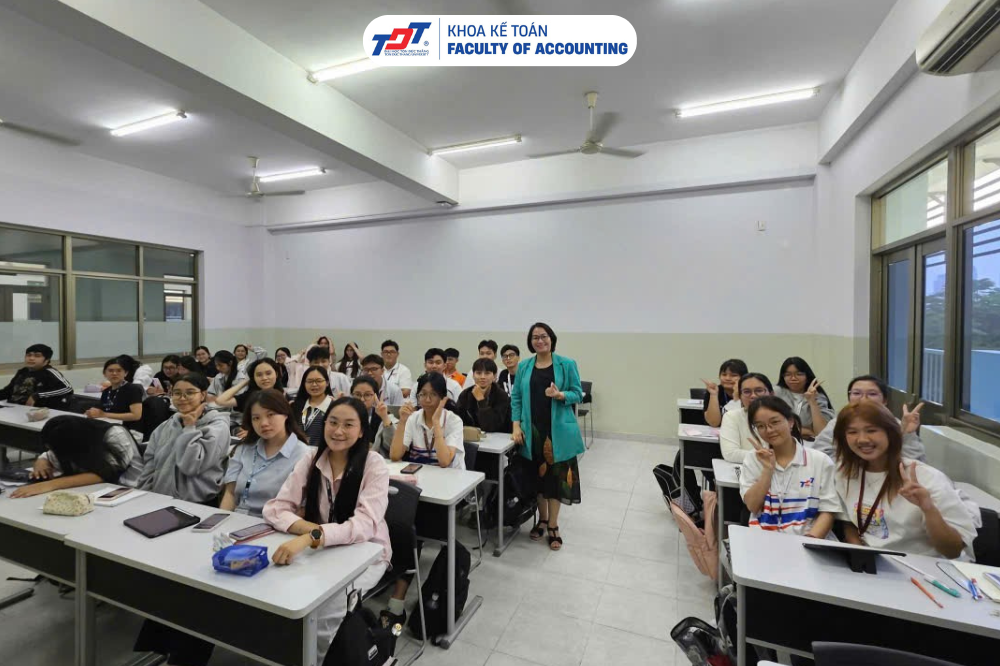
Join us in looking back at some memorable moments from first-year students’ journey of discovery!
- Log in to post comments